
Looking Back and Moving Forward: The Gift of Global Gifts
In the first issue of MennoExpressions, there was an article on the Self Help Crafts program. First Mennonite had been supporting this Fair Trade mission from Mennonite Central Committee since the early 1980s, where hand crafted items were ordered from various places that had MCC connections. Self Help Crafts sought to pay a fair wage to the craftspersons and/or farmers, to support sustainable endeavors and to engage them in relationship so that they might count on MCC as a reliable marketing partner. MCC sent boxes to interested groups on consignment, and those groups sold what was in them, sending the money back to MCC which had already paid the artisans. First Mennonite was one of those groups. Many sales were made through church presentations throughout the area, along with larger festivals such as the International Festival.
In the late 1980’s, Del Culp began to encourage the church members involved with Self Help Crafts, eventually known as “Ten Thousand Villages,” to set up a store front. It seemed daunting, especially since few of our members had owned a business, let alone a not-for-profit. Funding was needed, a board of directors had to be engaged, marketing was necessary…. Hiring a store manager was first on the list, and asking for many volunteer hours was second. Would we have enough? Should we stay within the church membership or attendees for volunteers? Questions abounded.
Not surprisingly, the FMC membership came through with money, remarkable help setting up the store (at 71st and Michigan Rd), a myriad of volunteers, and an active board of directors. Many people still attending FMC and Shalom, though now graying, gave much time, effort, and money. If we started mentioning names, the article would be too long!
In the late 1980’s, few really knew what Fair Trade meant. The Fair Trade Federation, an association committed to equitable and sustainable trading processes, only began its existence in 1994. Global Gifts was the first store in the Indianapolis area committed to creating a market for Fair Trade products.
The concept of Fair Trade grew in Europe and the US after World War II as efforts were made to help communities and peoples rebuild. One of the early pioneers of this movement was Edna Ruth Byler, whose interest in women’s needle crafting in Palestine set the stage for purchasing and sharing that work. She purchased the beautiful pieces while on MCC trips with her spouse, brought the items back to the US, and sold them. The idea grew. This was the model: Only a few paid employees were needed, but many interested parties could buy. The creators were paid very fairly. Volunteers would be the most important link to keeping costs low and assuring that the mission of supporting deserving and talented artisan groups throughout the world could continue.
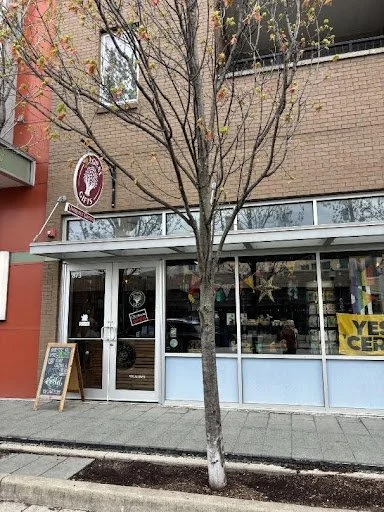
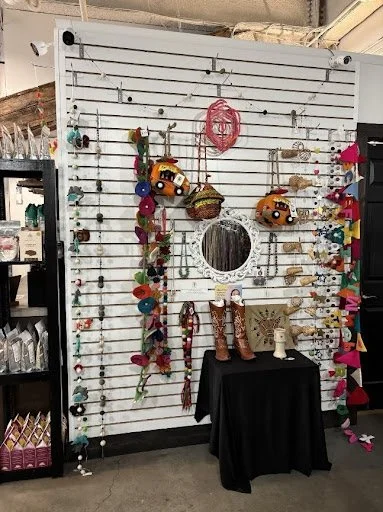
Now, as we look back and peek forward, Global Gifts still exists. Under the leadership of Sam Carpenter, it grew to four storefronts and a part-time shop in the International Center, selling millions of dollars of handcrafted goods and telling thousands of stories to the purchasers about the people who craft. Over time, the Mennonite Churches continued to have people involved on the board, volunteering and assuming leadership, but slowly the effort became more of a broader-community based one, although there are still persons from local Mennonite churches on the board and volunteering.
A changing world, COVID, and a greater access to Fair Trade items in larger stores led to more recent financial struggles and the closure of several sites, but two stores continue here in the city. One is on 873 Massachusetts Avenue downtown, the other is in Nora at 8519 Westfield Blvd.
Things have changed and continue to do so as challenges keep cropping up. Storefront businesses compete with online purchasing, and volunteering has a new look. The newest concern is what effect tariffs will have on the ability to purchase products or keep costs reasonable. Items come with a suggested cost, which covers the fair wage determined by the artisans, transportation costs, warehousing costs, and packaging, among other things. Stores must then determine what they must add to the cost to cover rent, electricity, and paid assistance. Volunteers are still crucial to the project’s survival. The present leadership is community based and filled by committed and giving souls who believe in carrying out the mission of the original founders.
The Global Gifts team still does festivals and shares their mission with service groups around the city. They engage with other service- minded not-for-profits for special shopping nights. Sometimes an individual will donate money for a group of persons serviced by a not-for-profit to come in and shop, each client being offered a specific amount of money to spend. Friend groups will come in for a shopping night after the stores close, and the shoppers can have some wine and a party, shop and enjoy stories about the artisans who made the Fair Trade goods.
Here is what has not changed: Nearly 40 years after the first store opened, the mission is that of sharing the stories of the many persons who craft the items on the shelves. This includes the women in the Philippines who have been trafficked and have found sanctuary in a new skill that allows them to feed families, the HIV positive persons who were once considered pariahs and now are actively part of their communities with business and craft skills, the coffee farmers who used to earn the tiniest percentage on the coffee sold in the US and are now making much more – all these people and more have improved their lives and the lives of their loved ones by the work they do. Global Gifts’ ability to provide a market for that work is continuing despite the barriers put in its way.
Even if Global Gifts eventually returns to its roots of the 1980s, where there was no storefront, only festivals, it’s likely the Fair Trade presence and the storytelling will continue, if someone has the passion to share it.
Visit a Global Gifts store near you. Keep the mission alive by purchasing or volunteering in stores or at off-site festivals (that’s fun!).
About the Author

Mary Liechty
Mary Liechty has been attending FMC for the past 50 years and just returned from a trip to Alaska with husband Ed to celebrate their 50th wedding anniversary.
